 JOA Mom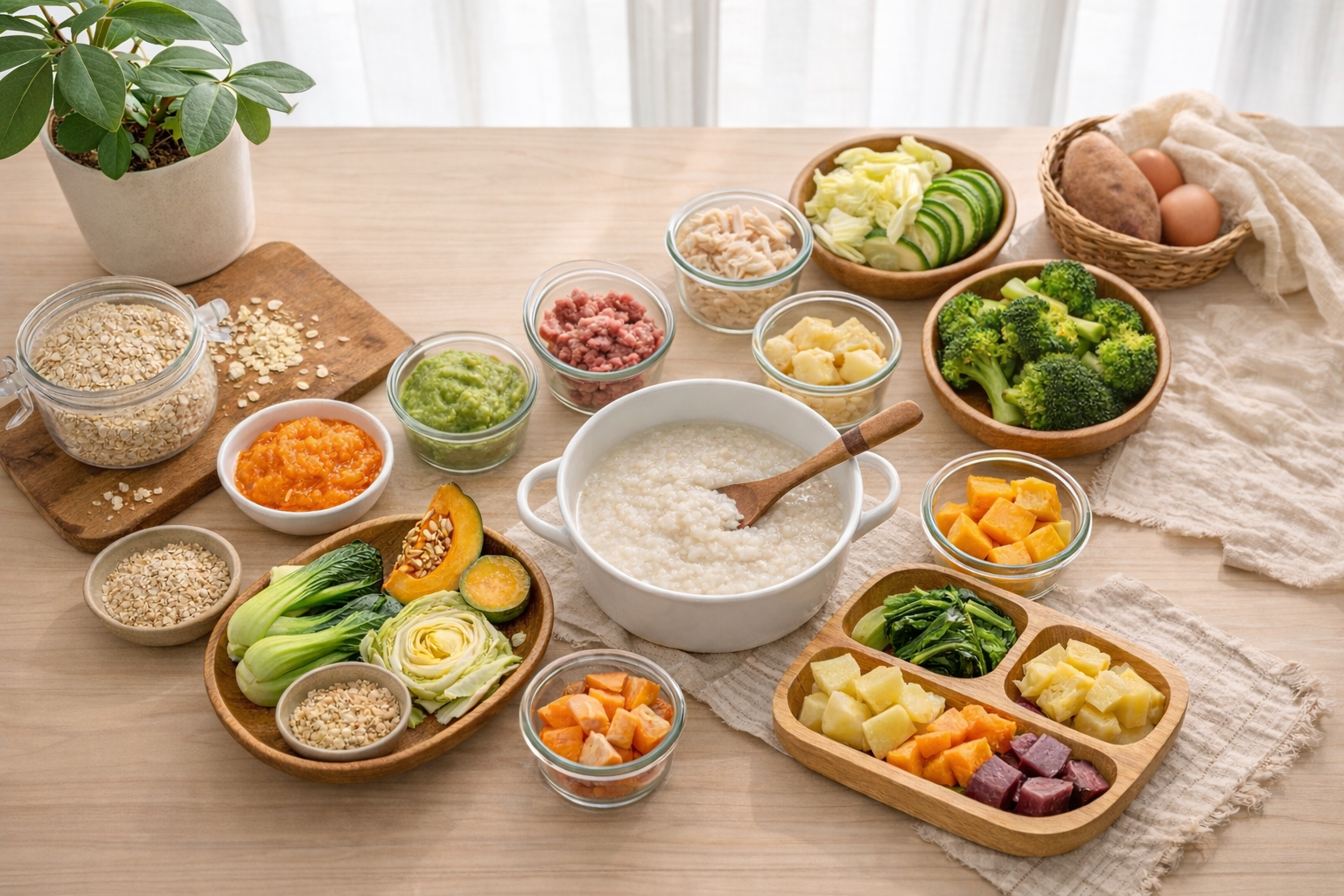
Introduction: A Gentle Start to Your Baby’s First Solids
Starting solids is one of the most exciting milestones in your baby’s first year, and this Korean Baby Food Roadmap is designed to help make the journey a little easier for parents.
Many global health organizations such as the CDC and the American Academy of Pediatrics (AAP) recommend introducing solid foods around 6 months of age (around Day 180). However, every baby develops at their own pace.
If your baby has strong head control, shows interest in your food, and has doubled their birth weight, some parents may consider starting slightly earlier, around 5 months (about Day 150). If you plan to begin earlier than 6 months, always make sure your baby shows all readiness signs and consult your pediatrician first. 👶
This Korean Baby Food Roadmap reflects my personal experience as a mom preparing homemade baby food. It’s meant to be a flexible guide rather than a strict rulebook. Feel free to adjust the pace based on your baby’s needs—after all, no one knows your baby better than you do. ❤️
💡 Reference for Parents
For professional guidelines on readiness signs, you can check:
CDC – When, What, and How to Introduce Solid Foods
AAP – Starting Solid Foods
Three Core Principles of the Korean Baby Food Roadmap
🌾 Rice & Oat Base
Rice porridge is traditionally the first food for many Korean babies. In my Korean Baby Food Roadmap, I also like to include oatmeal because it provides extra fiber and nutrients. Combining rice and oats creates a more balanced base for early baby meals.
🔍 The 3-Day Rule
Each new ingredient is introduced over three days. This allows parents to watch for possible allergic reactions and make sure the baby tolerates the ingredient well before adding something new.
🔄 The Relay Rotation
When introducing a new ingredient, I always keep one familiar ingredient from the previous days. This simple method helps babies adjust to new flavors more comfortably and reduces feeding stress.
🍼 Part 1: Days 170 – 179 | Starting the Korean Baby Food Roadmap
| Category | Day 170 | Day 171 | Day 172 | Day 173 | Day 174 | Day 175 | Day 176 | Day 177 | Day 178 | Day 179 |
| Base (60g) | Rice | Rice | Rice | Rice+Oat | Rice+Oat | Rice+Oat | Rice+Oat | Rice+Oat | Rice+Oat | Rice+Oat |
| Protein (10g) | – | – | – | – | – | – | Beef | Beef | Beef | Beef |
| Veg 1 (10g) | – | – | – | – | – | – | – | – | – | Zucchini |
| Total Amount | 60g | 60g | 60g | 60g | 60g | 60g | 70g | 70g | 70g | 80g |
🥕 Part 2: Days 180 – 189 | Expanding Your Baby’s Palate
| Category | Day 180 | Day 181 | Day 182 | Day 183 | Day 184 | Day 185 | Day 186 | Day 187 | Day 188 | Day 189 |
| Base (60g) | Rice+Oat | Rice+Oat | Rice+Oat | Rice+Oat | Rice+Oat | Rice+Oat | Rice+Oat | Rice+Oat | Rice+Oat | Rice+Oat |
| Protein (10g) | Beef | Beef | Beef | Beef | Beef | Beef | Beef | Beef | Chicken | Chicken |
| Veg 1 (10g) | Zucchini | Zucchini | Zucchini | Zucchini | Zucchini | Broccoli | Broccoli | Broccoli | Cabbage | Cabbage |
| Veg 2 (10g) | – | – | Broccoli | Broccoli | Broccoli | Cabbage | Cabbage | Cabbage | Broccoli | Broccoli |
| Total Amount | 80g | 80g | 90g | 90g | 90g | 90g | 90g | 90g | 90g | 90g |
(Note: Tatsoi is a nutrient-dense leafy green, often called Asian Spinach.)
🥦 Part 3: Days 190 – 199 | Completing the Stage 1 Roadmap
| Category | Day 190 | Day 191 | Day 192 | Day 193 | Day 194 | Day 195 | Day 196 | Day 197 | Day 198 | Day 199 |
| Base (60g) | Rice+Oat | Rice+Oat | Rice+Oat | Rice+Oat | Rice+Oat | Rice+Oat | Rice+Oat | Rice+Oat | Rice+Oat | Rice+Oat |
| Protein (10g) | Chicken | Chicken | Chicken | Chicken | Beef | Beef | Beef | Beef | Beef | Beef |
| Veg 1 (10g) | Cabbage | Cabbage | Cabbage | Cabbage | Tatsoi | Tatsoi | Tatsoi | Bok Choy | Bok Choy | Bok Choy |
| Veg 2 (10g) | Broccoli | Broccoli | Broccoli | Broccoli | Cabbage | Cabbage | Cabbage | Tatsoi | Tatsoi | Tatsoi |
| Veg 3 (10g) | – | Tatsoi | Tatsoi | Tatsoi | Bok Choy | Bok Choy | Bok Choy | Pumpkin | Pumpkin | Pumpkin |
| Total Amount | 90g | 100g | 100g | 100g | 100g | 100g | 100g | 100g | 100g | 100g |
(Note: Bok Choy is a popular variety of Chinese Cabbage.)
Download the Printable Baby Food Roadmap
Want an easy way to follow this schedule every day without checking your phone?
I created a printable Excel version of this Korean Baby Food Roadmap based on how I actually planned my baby’s meals at home. It made daily preparation much simpler and helped me stay consistent during busy days.
You can print it out, keep it on your fridge, or save it on your phone for quick reference.
👉 Download (Printable Excel) 👈
💛 If this roadmap helped you, I’d love to hear how your baby is doing—feel free to leave a comment below!
Serving Size & Preparation Guide
🎯 Amount
Start with about 60g of the base porridge. For every additional protein or vegetable ingredient, add about 10g to the total portion.
🎯 Goal
By the time your baby reaches Stage 2 (around Day 200), the goal of this Korean Baby Food Roadmap is for babies to comfortably enjoy a full serving of around 100g per meal.
🥣 Preparation Method
You can serve ingredients as separate toppings on the porridge or cook everything together into one smooth mixture. Try both approaches and see which method your baby prefers.
JOA Mom’s Pro Tip
In early baby meals, the real star of the dish is the base.
During the first stage of solids, helping babies become familiar with the gentle taste of rice is extremely important. That’s why my homemade rice porridge serves as the foundation for every meal in this Korean Baby Food Roadmap. 🍚
🔗 Check out my recipe:
5 Simple Steps to Make Korean Rice Porridge (Ssal-Mium)
Closing
Preparing baby food every day can feel overwhelming at first, especially for new parents. Having a simple plan like this Korean Baby Food Roadmap can make the process much more manageable.
Use this roadmap as a flexible guide, follow your baby’s pace, and enjoy this special stage together. I hope this Korean Baby Food Roadmap helps you and your baby have a smooth and joyful start to the solid food journey. 🥣💛
For personalized feeding advice, always consult your pediatrician.