
 JOA Mom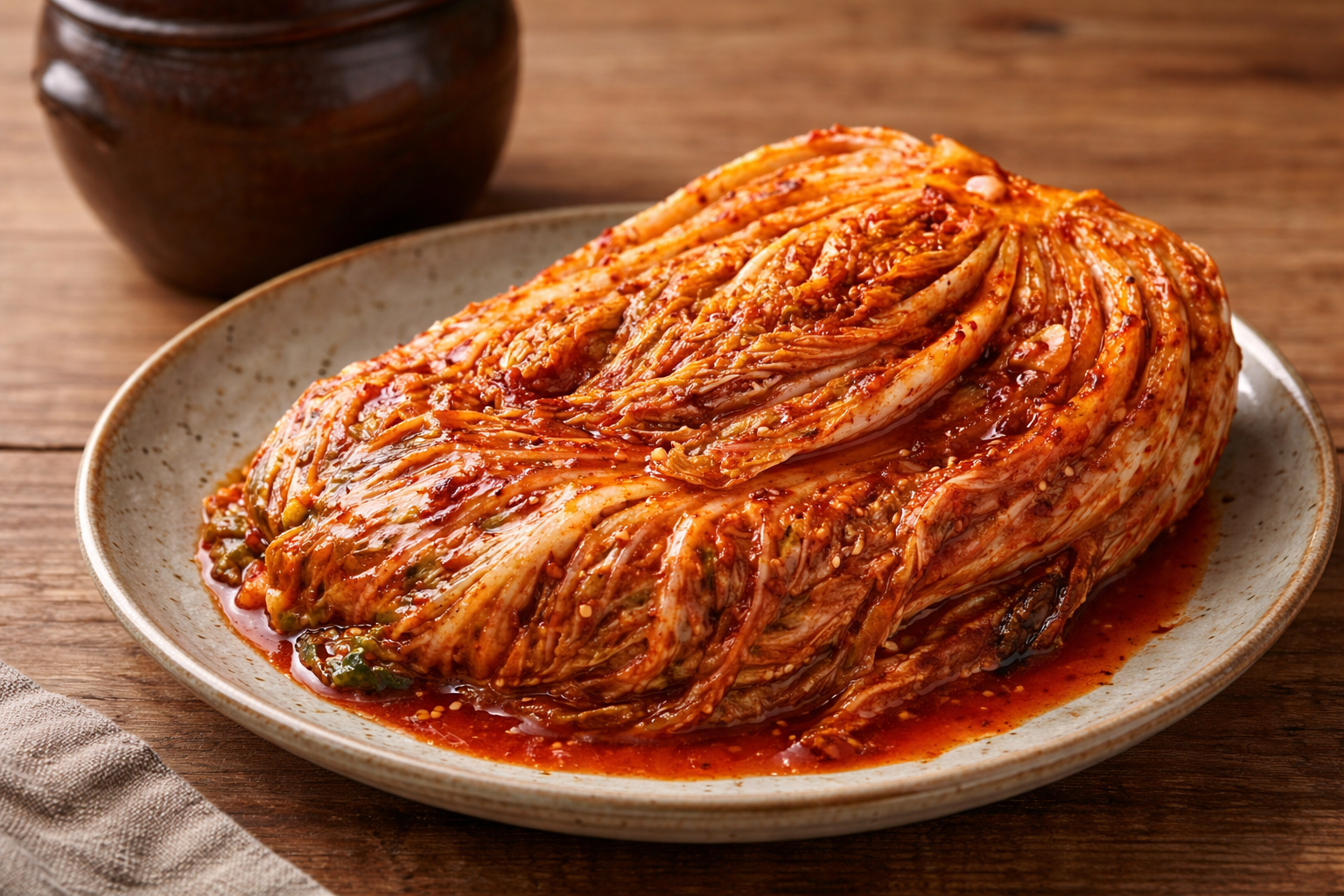
Introduction
How to make kimchi at home is easier than many people think.
If you’ve ever wondered how to make kimchi at home, you’re in the right place.
Authentic Korean kimchi isn’t just spicy cabbage. It’s layered, bold, slightly sweet, gently sour, and deeply savory. 🇰🇷✨
In 2022, The New York Times highlighted kimjang, the traditional Korean communal practice of making kimchi, as a meaningful seasonal ritual rooted in preservation and community.
This recipe follows that same traditional napa cabbage method — simple ingredients, proper salting, and patient fermentation.
Once you understand how to make kimchi correctly, it becomes surprisingly approachable.
Nutrition / Why this combo
Learning how to make kimchi isn’t complicated — but it is precise.
This traditional method works because:
✔ 🧂 Proper salting creates crunch and structure
✔ 🌡 Natural fermentation develops natural acidity
✔ 🌶 Gochugaru provides depth without harsh bitterness
✔ 🍚 Rice porridge helps the seasoning bind naturally
Once you know how to make kimchi properly, fermentation becomes predictable and rewarding.
Cooking Tip
The most important factor in how to make kimchi successfully is salt balance.
Too little salt → soft cabbage.
Too much salt → overly salty fermentation.
During brining, bend the thick white stem of a leaf.
If it bends without snapping, it’s ready.
If it cracks, it needs more time.
Texture is decided here — don’t rush it.
Ingredients
Fresh, high-quality ingredients make all the difference.
🥬 Main Ingredients
🥬 1 large Napa cabbage (about 2kg)
🧂 1/2 cup coarse sea salt
💧 Cold water
🌶 The Kimchi Paste (Sok)
🌶 1 cup Gochugaru (Korean red chili flakes)
🐟 1/4 cup fish sauce
(🌱 Substitute soy sauce for a vegan version)
🧄 1/4 cup minced garlic
🫚 1 tbsp minced ginger
🌱 1/2 cup chopped green onions
🥕 1 cup julienned Korean radish
🍚 The Natural Rice Binder
💧 1/2 cup water
🍚 1 tbsp glutinous rice flour
5 Simple Steps
These steps are the easiest way to learn how to make kimchi with consistent crunch and flavor.
1️⃣ Brine the Cabbage
Cut the cabbage into quarters. Sprinkle coarse sea salt generously between each leaf.
Let it sit for 2–3 hours until the thick stems bend flexibly.
Rinse three times in cold water and drain thoroughly.
2️⃣ Make the Rice Binder
In a small pot, combine water and rice flour.
Simmer on low heat, stirring constantly, until thick and translucent. Let cool completely.
3️⃣ Mix the Paste
In a large bowl, combine:
Cooled rice paste
Gochugaru
Fish sauce
Garlic
Ginger
Radish
Green onions
Let the mixture rest for 10–20 minutes so flavors deepen.
4️⃣ Coat the Leaves
Spread the paste thoroughly between every cabbage leaf, from outer layers to inner core.
Even coating ensures even fermentation.
5️⃣ Pack and Ferment
Pack tightly into a clean glass container.
Press down firmly to remove air pockets.
Leave at room temperature for 1–2 days until tiny bubbles form and a gentle tang develops.
Then transfer to the refrigerator.
If you’re new to how to make kimchi, remember that fermentation speed depends on temperature.
JOA Mom’s Experience
The first time I tried to make kimchi by myself, I worried about making mistakes.
But kimchi is surprisingly forgiving. If the cabbage is properly salted and the container is clean, fermentation works naturally.
Now homemade kimchi is always in my fridge. It becomes fried rice, stew, pancakes, or simply a bowl of warm rice with sesame oil. 🥣✨
Once you learn how to make kimchi yourself, store-bought versions taste completely different.
FAQ
Q. Can I make kimchi without fish sauce?
A. Yes. Use soy sauce or a vegan kelp-based alternative. Fermentation will still occur naturally.
Q. How long should I ferment kimchi at room temperature?
A. Usually 1–2 days depending on kitchen temperature.
Q. Why is my kimchi too salty?
A. Saltiness often mellows as fermentation continues. If still salty after a week, add fresh radish to balance it.
Q. How do I know fermentation has started?
A. Look for tiny bubbles and a slightly sour aroma.
Storage
🧊 Refrigerator:
Store kimchi in an airtight glass container in the refrigerator.
❄️ Freezer:
Freezing is not recommended.
🔥 Reheating:
Not needed. Serve cold, or cook it later in dishes like stew or fried rice.
Keep the cabbage submerged in its own juices.
Properly stored kimchi can last 3–6 months.
As it becomes more sour, it’s perfect for:
✔ Kimchi jjigae
✔ Kimchi fried rice
✔ Kimchi pancakes
Closing
Now that you know how to make kimchi, you’ve unlocked one of the most essential foundations of Korean cuisine.
But kimchi truly shines when paired with rich, savory dishes.
One of the most iconic combinations in Korea is kimchi with tender slices of boiled pork — the perfect contrast of warm meat and bright, fermented crunch.
If you want to experience that classic pairing, try it with my Korean Boiled Pork (Bossam).
The balance of juicy pork and tangy kimchi is unforgettable.
That’s the beauty of Korean food — bold flavors, perfectly balanced together. 🥬